
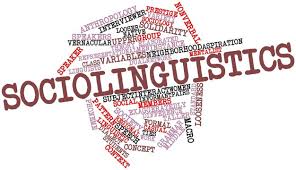
The course is designed to introduce third-year students to the field of sociolinguistics, which is a major component of macro-linguistics. It provides students with an understanding of the intertwined relationship between language, society, and culture. The course sheds light on the diverse functions that language serves within a given society. It explores how language contributes to the definition, preservation, and expression of group identity and social connections among speakers. Throughout the course, students explore various topics that revolve around the central theme of language in its real social context.
These topics include a comparison between sociolinguistics and formal linguistics, the examination of regional and social dialects, styles, and registers of language, the study of pidgin and Creole languages, the exploration of language variation throughout space/places/regions and change over time, the examination of the relationship between language and culture, and an introduction to the fields of ethnography and ethno-methodology. Additionally, the course covers the outcomes of language contact situations in Algeria such as diglossia, borrowing, code switching, and code-mixing.
Furthermore, the course delves into yet helps students gain insights into the challenges and approaches involved in the management of language, language planning, and language policy, with a specific focus on the Algerian context. To get the most out of this course, students are advised to actively participate in assessment exercises held at the end of each session and complete online assignments, which will be reviewed by the instructor, at the end of each lecture.
- Enseignant: Habib BOUDJEMA
A T.D work, to be done before the exam of the module of: Translation, English- Arabic-English, for the L3, English.
- Enseignant: Kheira TOUAF