

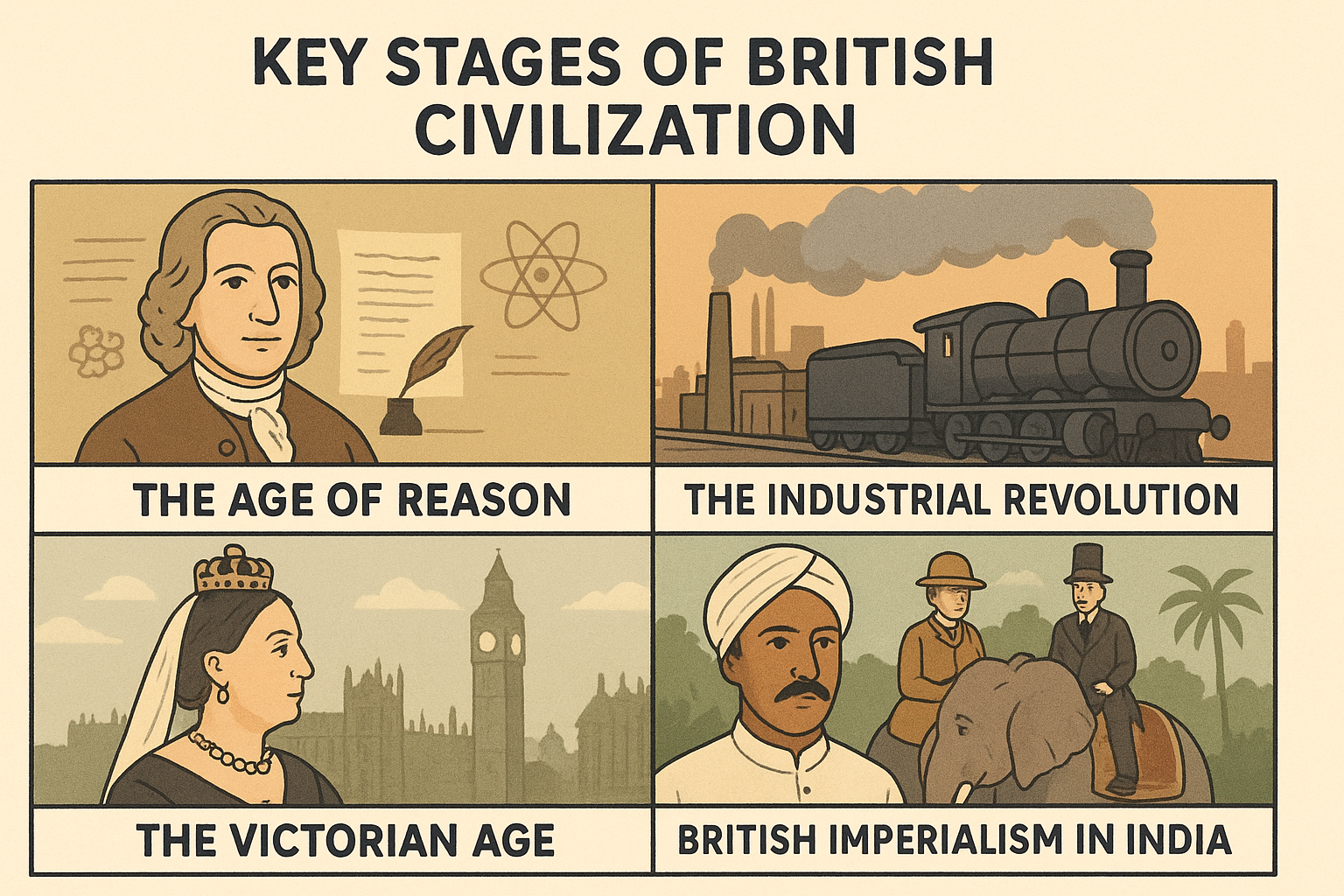
This course introduces major historical periods that shaped modern Britain, focusing on intellectual, social, and political transformation.
1. The Age of Reason
This unit explores the Enlightenment and its key ideas—rationality, scientific progress, and individual rights. Thinkers such as Locke and Newton challenged traditional authority and promoted new views on government and society, laying the groundwork for later reforms.
2. The Industrial Revolution
Students examine Britain’s transition from an agricultural society to an industrial power. Innovations like the steam engine and factory system transformed production and daily life. The period saw rapid urbanization, economic growth, and new social challenges, including harsh labor conditions and class tensions.
3. The Victorian Age
This section covers the social and cultural features of Queen Victoria’s reign. Victorianism emphasized respectability, discipline, and progress. The era also witnessed major political activism, including the Chartist movement, which pushed for democratic reforms such as universal male suffrage.
4. British Imperialism in India
The course concludes with Britain’s expansion and rule in India. Students learn about economic exploitation, cultural influence, and key events such as the 1857 Rebellion. This unit highlights how imperialism shaped both British power and resistance movements in India.
Overall, the course provides a structured overview of how ideas, industry, social change, and empire contributed to Britain’s development into a modern nation.